
Heritage Threads: A Modern Embroidery Revival

In a world increasingly dominated by fast fashion, the resurgence of traditional embroidery in women's festive attire is a breath of fresh air, offering a fusion of cultural heritage and contemporary aesthetics. This trend not only celebrates artisanal craftsmanship but also aligns with a broader movement towards sustainability and cultural appreciation within the fashion industry.
Artistry Meets Modernity
The revival of traditional embroidery techniques is being led by designers who are reimagining these age-old crafts within modern contexts. Take, for instance, HUI Milano's Fall/Winter 2026–2027 collection, "Her Threads," which showcased Nü Gong embroidery—a traditional Chinese technique—reinvented for today's fashion landscape. This collection is a testament to how heritage can be seamlessly integrated into the modern wardrobe, offering pieces that are both visually striking and culturally meaningful.
Similarly, Stella Jean's Spring 2026 collection, "Where Women Move Mountains," marked a pioneering collaboration with Bhutanese artisans. By incorporating traditional Bhutanese textiles into contemporary silhouettes, Jean not only brought attention to these exquisite crafts but also set a precedent for cross-cultural collaborations in high fashion. Such initiatives reflect a growing trend among designers to honour global artisanal techniques, enriching their collections with diverse cultural narratives.
The Craft of Storytelling Through Fabric
Traditional embroidery is more than just decorative; it is a narrative art form, each stitch and motif telling a story. In markets rich with textile traditions—such as India, the US, Europe, and the Gulf—embroidered garments resonate deeply with consumers who value authenticity and heritage. Manish Malhotra's haute couture shows are a prime example of this trend. His collections, like "The India Story: Inaya 2026" and "Maa," are rich tapestries of intricate designs that celebrate Indian embroidery while appealing to a global audience.

The appeal of these garments lies not only in their aesthetic beauty but also in their craftsmanship. The delicate handwork, often involving thousands of hours, speaks of dedication to preserving a craft that is both timeless and evolving. This narrative is visually powerful, making embroidered garments a symbol of sustainable luxury.
Elegance in Every Stitch
The modern interpretation of traditional embroidery in women's festive wear often involves a delicate balance. Designers are opting for cleaner lines and fluid drapes, allowing the intricate handwork to take centre stage without overwhelming the garment. This approach caters to consumers seeking elegance and comfort, ensuring that the garments are suitable for a variety of occasions.
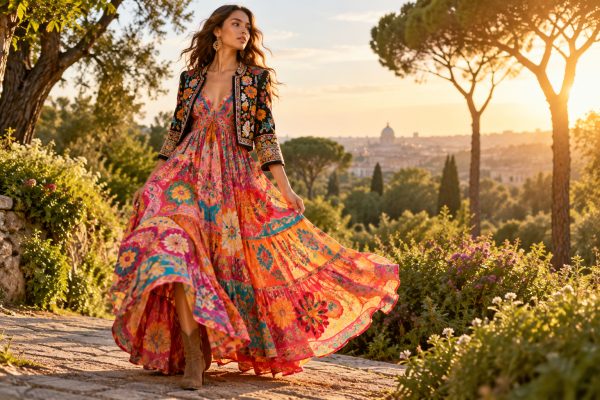
Embroidery finds its place across different types of festive wear. Embroidered gowns and midi dresses offer sophistication for formal events, while traditional kurta sets and modern co-ord sets bring a touch of cultural flair to everyday wear. Outerwear too, such as embroidered jackets and coats, adds a festive touch to ensembles, making them versatile pieces in any wardrobe.

Seasonal adaptability further enhances the appeal of embroidered garments. In warmer climates, lighter fabrics with delicate embroidery provide comfort and style, whereas in cooler regions, heavier materials with intricate designs offer warmth and visual interest. This versatility ensures that embroidered pieces remain relevant throughout the year.
A Cultural and Sustainable Narrative
As the fashion industry continues to grapple with issues of sustainability, the resurgence of traditional embroidery in festive wear represents a meaningful shift towards more responsible practices. By supporting artisans and preserving traditional crafts, the industry not only offers consumers unique pieces but also fosters a deeper appreciation for the cultural narratives embedded in each garment.
This revival is not merely a trend but a movement—one that encourages us to look beyond the superficial and appreciate the stories woven into the very fabric of the clothes we wear. As traditional embroidery continues to captivate the imagination of designers and consumers alike, it stands as a testament to the enduring allure of heritage and the transformative power of fashion.
Trendsmodern embroiderytraditional embroiderywomen's festive wearheritage designscultural fashion
Comments
No comments yet — start the conversation.